
Loading...
Serving Austin, MN and surrounding areas. (507) 509-6204
Cold spots, high heating bills, and drafty work areas cost you money every month. We insulate Austin commercial buildings and get it done right the first time.
Commercial insulation in Austin slows heat movement through your building walls, roof, and floors, keeping the warmth you pay for inside during winter and heat outside during summer. Most jobs are completed in one to three days with minimal disruption to your operations.
Austin commercial buildings from the mid-20th century were often built before modern energy standards existed. Whatever insulation was installed has likely settled, compressed, or degraded over the decades. We assess the current state of your building envelope and give you a clear picture of what upgrading will accomplish. Business owners who also need moisture control beneath their building often combine this work with a crawl space vapor barrier to address both issues in one project.
Austin winters run from October through April, and every month the furnace runs hard, you either pay for heating or the building envelope holds that heat inside. A well-insulated building in this climate earns back its investment faster than in milder markets.
If you are paying noticeably more to heat your building than you were a few years ago, and nothing has changed in your hours or equipment, heat is escaping somewhere it should not be. In Austin winters, even a modest improvement in insulation produces a meaningful drop in monthly energy costs.
Cold corners near exterior walls, rooms above unheated spaces, or areas that never warm up no matter how high you set the thermostat are a classic sign of missing or inadequate insulation. If your staff is wearing coats at their desks in January, the problem is almost certainly in the walls or ceiling.
In Austin's climate, where temperatures can drop sharply overnight, moisture problems often show up as frost on the inside of exterior walls or water stains on ceilings after a cold snap. This means warm, moist indoor air is reaching a cold surface, which signals the insulation and vapor barrier are not doing their job.
Many older commercial buildings in Austin were built when energy costs were low and insulation standards were minimal. If your building has never been evaluated, there is a reasonable chance it is losing heat in ways a modest investment could fix. An assessment from a reputable contractor costs nothing and gives you a clear picture of where you stand.
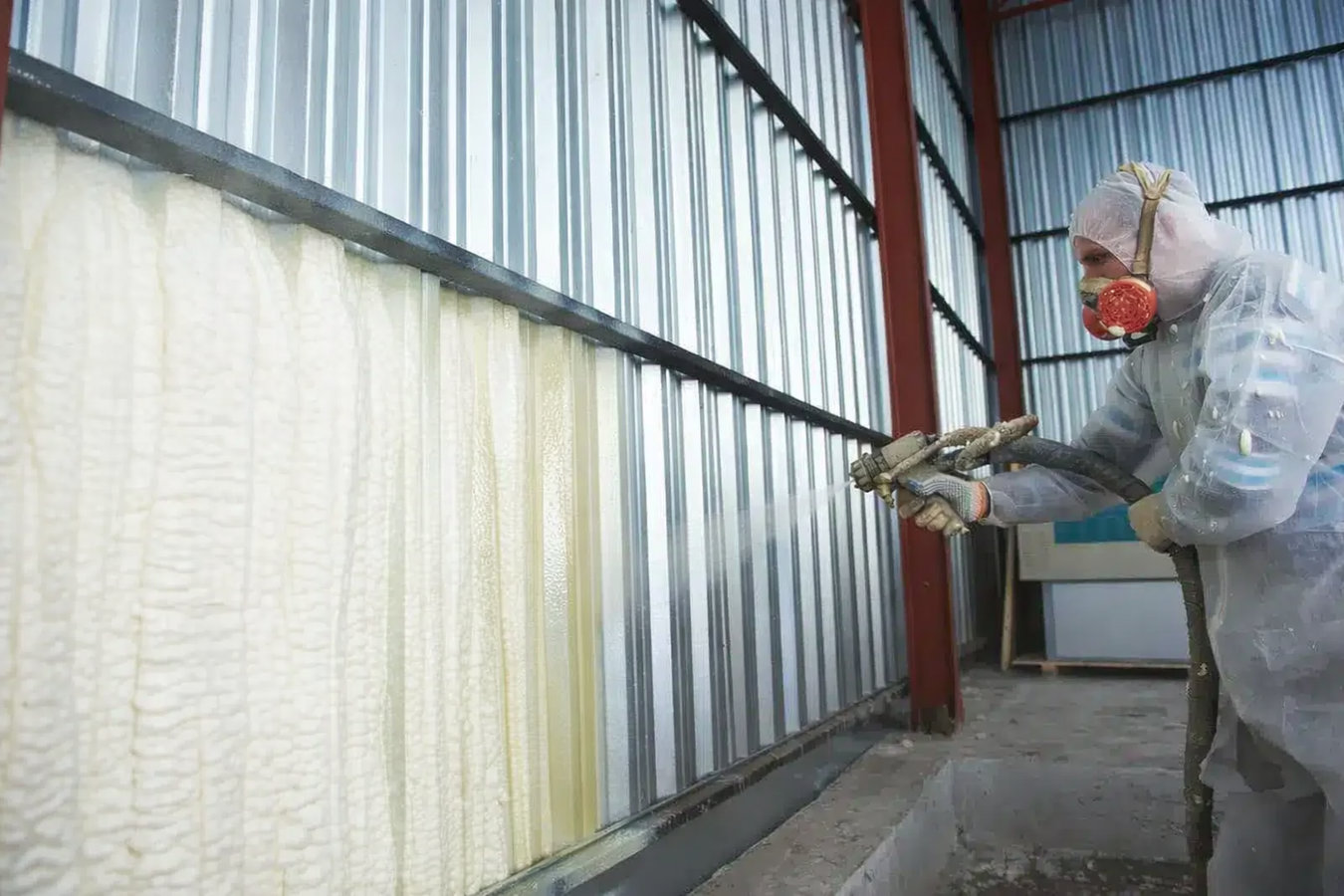
We install blown-in loose fill, rigid foam board, and spray foam in commercial buildings across Austin and southern Minnesota. Each material serves a different purpose depending on where in the building it is going and what problem it is solving. For rooflines, wall assemblies, and spaces where thickness is limited, spray foam insulation provides the highest performance in the smallest footprint.
We also address vapor control as part of every commercial project. In Minnesota, warm indoor air can carry moisture into wall and ceiling cavities where it condenses and causes mold or rot over time. Good commercial insulation work includes attention to moisture management, not just R-value. Businesses that have any refrigerated or temperature-controlled areas should ask specifically about vapor barrier options, which can also be installed as a standalone crawl space vapor barrier beneath the building footprint.
Best for adding insulation to existing attic spaces in commercial buildings without major disruption to daily operations.
Suited to rooflines, irregular cavities, and buildings where air sealing is as important as thermal resistance.
Ideal for foundation walls, below-grade applications, and locations where moisture resistance is a priority.
Right for older Austin buildings where degraded or contaminated material needs to come out before new insulation goes in.
Austin sits in Mower County in southern Minnesota, where average January lows regularly drop below five degrees and wind chills push temperatures far colder. The Minnesota Department of Commerce recommends insulation levels for commercial buildings in this climate zone that are significantly higher than what you would need in a moderate climate. Many commercial buildings in Austin were constructed during the mid-20th century when energy standards were minimal, and the insulation that was installed, if any, has had decades to settle and degrade. Business owners in Mankato and Rochester face the same long heating season, and we serve commercial clients across the region.
Southern Minnesota also experiences repeated freeze-thaw cycles in late winter and early spring, when temperatures swing above and below freezing within the same week. These cycles stress building materials, open up small gaps in wall assemblies, and allow moisture to work its way into insulation. If your building has had any water intrusion issues in spring, that is a sign the building envelope, including the insulation, may need attention before the next heating season. Austin businesses that operate food-related or cold-storage facilities should also ask about insulation materials rated for those specific conditions, since standard residential products are not always appropriate for extreme temperature differentials.
We reply within one business day. Tell us your building type, size, and the problem you are trying to solve. We will schedule an on-site visit rather than guessing from a phone description.
We walk the attic, exterior walls, basement or crawl space, and any mechanical rooms. We may use a thermal camera to identify spots where heat is escaping that are not visible to the naked eye. This visit typically takes one to two hours.
You receive a written estimate explaining what work is recommended, what materials will be used, and the total cost. We explain every line item. If permits are required, we handle the process for you.
Most commercial jobs are completed in one to three days. The crew works in attic and mechanical spaces that do not interrupt daily operations. At the end of each day, we communicate what was completed and what is still to come.
No obligation. We reply within one business day and work around your schedule.
(507) 509-6204We work on both residential homes and commercial buildings across Austin and the surrounding region. That means we understand the specific demands of commercial building envelopes, including vapor management, code compliance, and access logistics, not just residential best practices.
We apply insulation at levels calibrated to Minnesota's recommended requirements for this climate zone, which are among the strictest in the country. A contractor who quotes you the bare minimum may be leaving money on the table for your heating bills every winter.
We follow installation standards recognized by the North American Insulation Manufacturers Association, the main trade body for the insulation industry. That means no gaps, no compressed sections, and no areas that were stuffed in rather than properly installed.
Minnesota requires permits for some commercial insulation work, and the City of Austin enforces those requirements locally. We know which projects trigger a permit requirement and handle the paperwork before work begins. You should never be chasing permit documentation yourself.
Every commercial job we do in Austin is backed by a clear written estimate, a realistic timeline, and a final walkthrough before we leave. We work on older buildings every week and know what it takes to bring them up to a standard that holds heat through a Minnesota winter.
Commercial energy code requirements for Minnesota buildings are maintained by the U.S. Department of Energy.
Moisture control under your building foundation, paired with insulation to prevent condensation and mold in cold Minnesota winters.
Learn MoreHigh-performance spray foam for commercial rooflines, wall assemblies, and hard-to-reach cavities where blown-in material cannot reach.
Learn MoreAustin winters start early - book your assessment now and have your building ready before heating season hits.