
Loading...
Serving Austin, MN and surrounding areas. (507) 509-6204
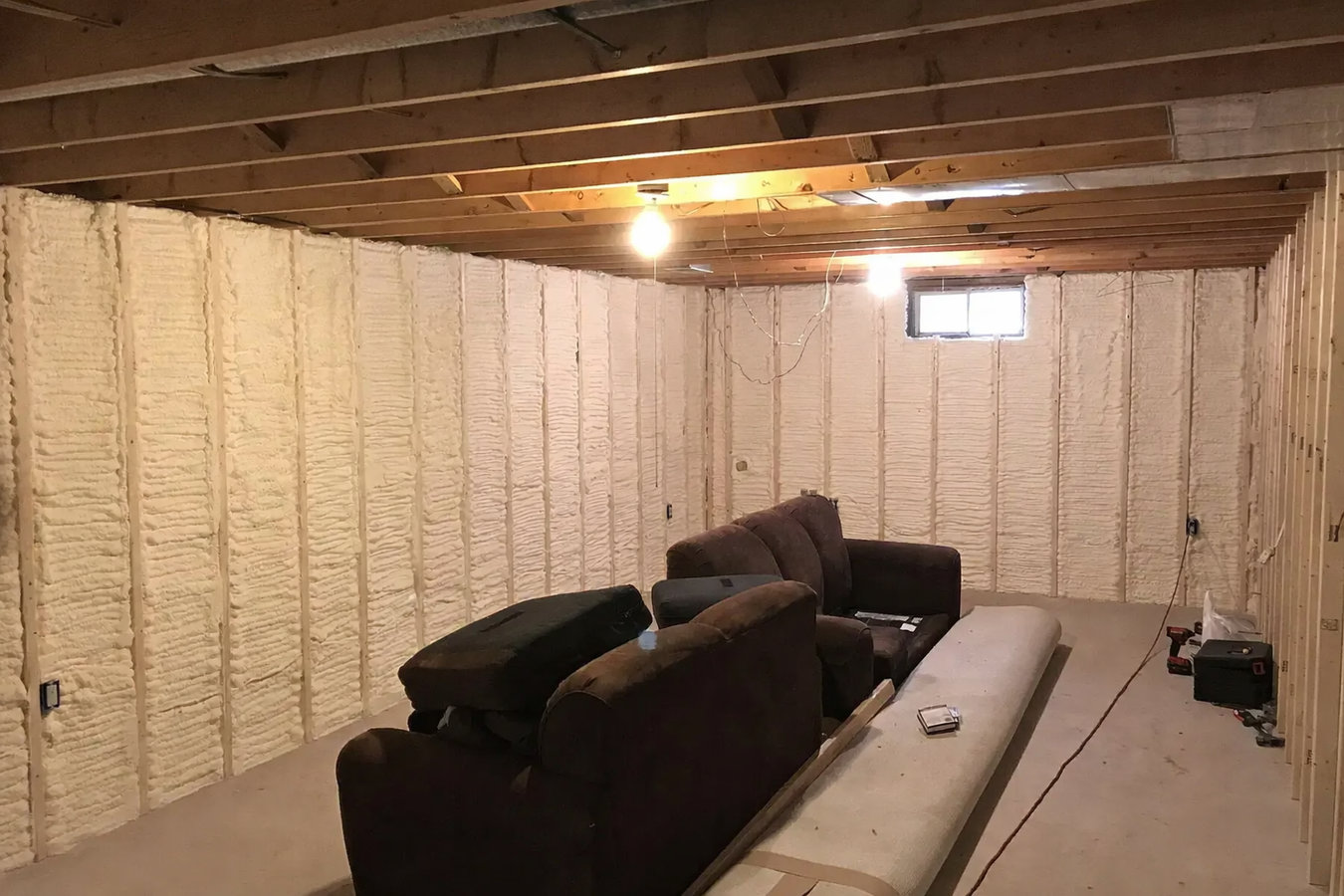
If your floors are cold in winter and your heating bills keep climbing, your basement walls may be the problem. We insulate Austin basements so your home holds heat where it belongs.
Basement insulation in Austin, MN creates a thermal barrier along your foundation walls and rim joists that slows heat from escaping into the ground, most jobs are completed in one to two days and homeowners typically notice the difference in their first full heating season.
Austin sits in Mower County, where January temperatures regularly fall below zero and the heating season stretches from October through April. A basement that is losing heat through bare concrete walls forces your furnace to run longer and your floors to stay cold no matter how high you set the thermostat. Many Austin homes built before the mid-1980s were never insulated below grade at all - the first step is knowing what you are working with.
Basement insulation works best when paired with air sealing services - sealing the gaps around pipes and rim joists before adding insulation stops cold air from bypassing the insulation entirely.
If you walk across your first floor in socks during a Minnesota winter and the floor feels noticeably cold, heat is escaping through your basement ceiling. This is especially common in Austin homes built before the 1980s, where the floor above an uninsulated basement has nothing slowing the cold from rising up. It is one of the most consistent signs that basement insulation is missing or inadequate.
Austin's heating season is long and demanding, and an under-insulated basement forces your furnace to work overtime for months. If your gas or electric bills jump significantly each fall and you cannot point to another obvious cause, your basement is a likely culprit. Comparing your bills to neighbors with similar-sized homes can give you a rough sense of whether your energy use is out of line.
If you walk into your basement and the walls are exposed concrete or concrete block with nothing covering them, you almost certainly have no wall insulation. This is extremely common in Austin homes built before 1980. Bare walls lose heat steadily all winter long, and they are also more likely to develop condensation problems as temperatures swing.
A persistent musty odor in your basement often signals moisture is present, and moisture and insulation do not mix well. If you are planning to add insulation, any moisture issue needs to be identified and fixed first. Catching this before insulation goes in protects you from a much more expensive mold problem later on.
We offer two main approaches to basement insulation: insulating the foundation walls themselves, which turns your basement into a semi-conditioned space useful for storage, laundry, or living areas, and insulating the floor above, which protects your first floor from cold below while leaving the basement unheated. Both approaches benefit from closed-cell foam insulation on the rim joists, the band of framing that sits right on top of your foundation, since that area is one of the biggest air leak points in an older home.
For homes with dirt floors or moisture-prone crawl spaces that connect to the basement area, we also pair basement work with crawl space insulation to address the full below-grade envelope. The right combination depends on how you use the space, the current condition of your walls, and whether moisture remediation needs to happen first. We walk you through that assessment before any work begins.
Best for homeowners who use the basement for storage, laundry, or finished living space - keeps the entire below-grade area warmer.
Best for unfinished basements where the goal is protecting the first floor from cold air rising up from below.
Suits any basement - targets the single most common air leak point in older Minnesota homes and delivers immediate comfort improvement.
For homes where the basement connects to a crawl space - addresses the full below-grade envelope in a single project.
Austin winters are among the most demanding in the Upper Midwest. January lows regularly drop below zero and the ground can freeze over 40 inches deep in a severe year. That sustained cold presses against every uninsulated surface on your home's exterior, and your basement walls - often bare concrete or block - offer almost no resistance. Homes near the Cedar River also deal with seasonal moisture from snowmelt and spring rain, which means wet basement walls are a real concern before any insulation work begins.
Austin's housing stock skews older, and many homes in established neighborhoods were built before the 1985 era when basement insulation became common in Minnesota construction. Whether your home is in Red Wing or closer to Albert Lea, the same pattern holds: older construction, colder basements, and real money leaving through uninsulated foundation walls every winter. Minnesota's energy code sets minimum requirements for insulation work today, which means any permitted job in Austin must meet those standards - a useful protection for homeowners hiring a contractor.
Tell us about your home - its age, whether your basement is finished or unfinished, and the problem you are trying to solve. We respond within one business day and schedule an in-person visit before quoting any price.
We walk through your basement, check for moisture on the walls, note where pipes and panels are, and measure the space. This typically takes 30 to 60 minutes. We explain what we find and answer your questions before handing you a written estimate.
Your estimate outlines what work will be done, what materials will be used, and the total cost - no vague line items. We confirm any permit requirements with the City of Austin before scheduling your install date.
Most average Austin basements are completed in one to two days. Before the crew leaves, we walk you through the finished work so you can see every treated area and ask any remaining questions. You never have to wonder if the job was done right.
Free estimate, no obligation. We respond within one business day.
(507) 509-6204We inspect for signs of water intrusion before recommending any insulation approach - because insulating over a damp wall creates mold, not comfort. If moisture needs to be addressed first, we tell you plainly rather than skipping that step to make the sale.
Many Austin homes were built before 1970, and older basements come with quirks - unusual framing, layered finishes, or foundation walls that have shifted over decades of freeze-thaw cycles. We know what to look for and how to work around it without cutting corners on coverage.
When your basement project needs a permit, we handle the paperwork and coordinate with the City of Austin or Mower County so the work is done to code. You do not have to chase down the details yourself.
Before the crew packs up, we walk you through the finished installation so you can see what was done and ask any question you have. You should never feel like you are just trusting a stranger and hoping for the best - with us, you see the work with your own eyes.
Austin winters are long and unforgiving, and your basement is one of the biggest sources of heat loss in an older home. We combine local knowledge, honest assessments, and careful installation to make sure the work you pay for actually keeps your home warmer.
For more on moisture control and basement best practices, see the U.S. Department of Energy guide to moisture control. Federal tax credits for qualifying insulation upgrades are covered at ENERGY STAR.
High-performance spray foam that seals air gaps and insulates in a single application - ideal for rim joists and hard-to-reach basement areas.
Learn MoreInsulation and air sealing for the crawl space beneath your home, reducing moisture intrusion and cold floors in the living areas above.
Learn MoreAustin winters are long - get your home ready before the next cold snap hits and start saving on heating costs this season.