
Loading...
Serving Austin, MN and surrounding areas. (507) 509-6204
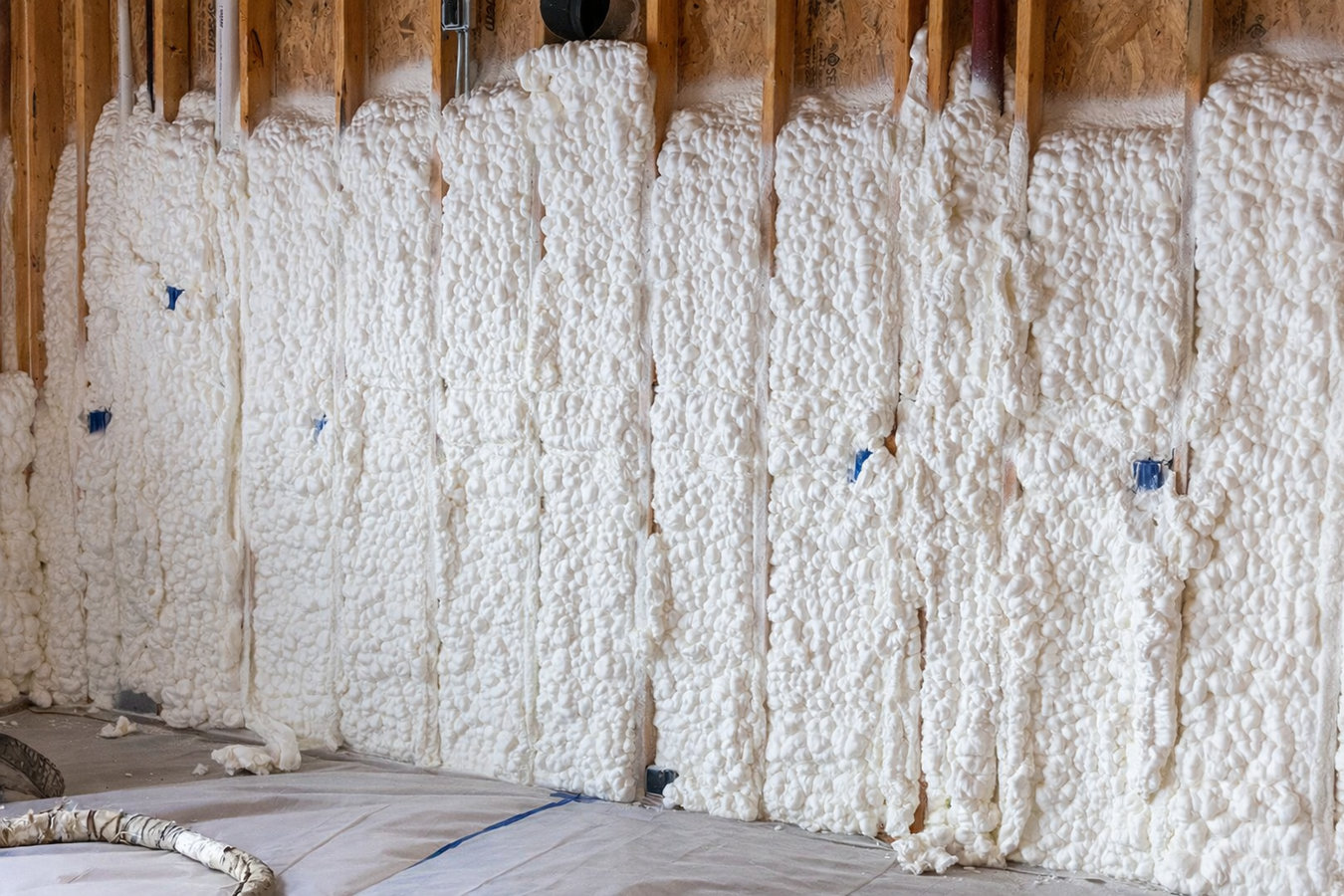
Closed-cell foam blocks both heat loss and air infiltration in one application - no gaps, no settling, no thin spots. We install it in the spots Austin homes lose the most heat.
Closed-cell foam insulation in Austin, MN expands when applied and hardens into a dense, rigid layer that blocks both heat transfer and air movement at the same time, most jobs covering rim joists or a crawl space are completed in one to two days with a 24-hour re-entry period after spraying.
Standard fiberglass batts slow heat conduction but do nothing about air movement through gaps, which is where most heat actually escapes in an older Austin home. Closed-cell foam fills every crack and cavity it contacts, leaving a seamless layer with no bypasses for cold air. Austin sits in a climate zone where that distinction matters - January temperatures regularly fall below zero, and a home with good insulation but poor air sealing still runs its furnace harder than it should.
Closed-cell foam is especially practical when combined with broader spray foam insulation projects - it delivers high R-value per inch in tight spaces where you cannot fit thicker materials, making it the go-to choice for rim joists, narrow crawl spaces, and attic knee walls.
If your gas bill jumps sharply during Austin's coldest months, that often signals heated air is escaping somewhere it should not be. A well-insulated home holds its temperature more steadily, so the furnace does not have to work as hard. If you are running the heat constantly and still feel cold near the floor or exterior walls, air leaks are the likely culprit.
Stand in your basement or near an exterior wall on a cold January day and hold your hand near the floor or the base of the wall. If you feel a draft or noticeably cooler air, cold outside air is finding its way in - often through the rim joist, the band of wood sitting right on top of your foundation. This is one of the most common and fixable air leak points in older Austin-area homes.
Austin summers bring real humidity, and a vented or poorly sealed crawl space lets that moisture accumulate under your home. If you notice a musty smell in your basement or first floor, or see condensation on crawl space surfaces, that moisture is working against your home's structure and air quality. Closed-cell foam applied to crawl space walls can dramatically reduce that moisture intrusion.
Homes built in Austin before modern energy codes were adopted were often constructed with minimal insulation in rim joists, crawl spaces, and attic knee walls. If you have never had an energy audit or insulation upgrade, there is a reasonable chance you have significant gaps. A quick look at the band of wood along the top of your foundation wall tells you a lot - bare wood or fallen-out fiberglass means that area is losing heat.
We apply closed-cell foam where it delivers the biggest return: rim joists, crawl space walls and floor perimeters, attic knee walls, and any tight cavity where standard batt insulation leaves air bypasses. Because the foam expands to fill the space it contacts, it handles irregular framing and odd-shaped cavities that other materials cannot seal cleanly. For homeowners who want the full picture on foam options, we also install open-cell foam insulation, which uses a different chemistry suited to interior walls and larger attic spaces where you do not need the higher density of closed-cell.
Rim joist sealing is the most common starting point for Austin homeowners because it targets the single biggest air leak in most older homes with minimal disruption and a relatively contained project cost. From there, crawl space and attic applications extend the benefit through the rest of the home's thermal envelope. All closed-cell foam work we do is part of a broader commitment to spray foam insulation that actually addresses the root cause of heat loss rather than layering material on top of an air leak.
Best for any homeowner with an older Austin home - the single most impactful upgrade for stopping cold air infiltration at the foundation line.
Suits homes with vented or poorly sealed crawl spaces where summer humidity and winter cold are both creating problems year-round.
For homes with finished upper floors or bonus rooms where knee wall cavities are a primary heat-loss point that standard batts cannot fully seal.
For homeowners finishing a basement, adding a room addition, or converting an unheated space - closed-cell foam meets Minnesota energy code requirements efficiently in tight framing.
Austin is in USDA Hardiness Zone 4b with average January lows well below zero and wind chills that push temperatures even further down. Natural gas heating is the dominant fuel source in the area, and prices have shown significant seasonal volatility during cold stretches - particularly during polar vortex events when demand spikes and heating bills follow. A home that leaks air at the rim joists and crawl space runs its furnace continuously during those stretches, and closed-cell foam eliminates the gaps that make that happen. Austin was founded in 1856 and much of its residential housing was built in the mid-20th century or earlier, when insulation standards were far less demanding - that older stock is exactly where closed-cell foam delivers the most immediate benefit.
The Cedar River valley location also means summer humidity is a real concern, and closed-cell foam's impermeability to water vapor makes it a practical choice for crawl spaces that would otherwise accumulate moisture from ground contact. Homeowners in Faribault and New Ulm face similar climate conditions, and the same tight-space, high-performance argument for closed-cell foam applies across the region.
Describe what you are noticing - high heating bills, cold floors, a musty crawl space. We ask a few basic questions about your home and schedule an in-person visit within a day or two. We reply within one business day of your first message.
We visit your home and look at the areas where foam could help - rim joists, crawl space, attic, uninsulated exterior walls. We measure, check for existing insulation and moisture signs, and deliver a written estimate before we leave or within a day.
Clear the work area and plan for you, your family, and pets to be out of the home for at least 24 hours after spraying. We confirm this timeline with you before the crew arrives - no surprises on installation day.
Most rim joist or crawl space jobs take a few hours to a full day. Once the foam cures and you return, we walk you through the completed work so you can see the coverage with your own eyes and confirm everything looks right.
Free estimate, no obligation. We respond within one business day.
(507) 509-6204Foam thickness determines R-value, and R-value determines how much heat you keep. Before any project begins, we put the target thickness in your written quote - so you know exactly what you are getting, not just that some foam was applied. That commitment holds us accountable to the work, not just to showing up.
The Spray Polyurethane Foam Alliance sets the industry standard for safe application, proper re-entry protocols, and quality installation. We follow SPFA guidelines on every job - not as a marketing claim, but because correctly applied foam performs significantly better than rushed work.
Very cold temperatures affect how spray foam cures, and contractors without cold-climate experience can deliver poor results in a Minnesota winter. We use equipment suited for cold conditions and know when to adjust for temperature - which matters in Austin where project demand peaks precisely when it is coldest outside.
One advantage of closed-cell foam over other insulation types is that the finished product is visible - you can see the coverage, look for thin spots, and confirm the areas you paid to have treated are actually treated. We walk through the job with you before we leave, and you should feel comfortable asking to see any area that was covered.
Austin winters demand insulation that does its job year after year without settling, absorbing moisture, or leaving gaps. We install closed-cell foam the right way the first time - so you are not chasing the same heat-loss problem two winters from now.
The U.S. Department of Energy covers insulation R-values and air sealing guidance at energy.gov/energysaver/insulation.
A lighter-density spray foam option suited to interior walls and larger attic spaces where flexibility and sound control matter alongside thermal performance.
Learn MoreFull-service spray foam insulation covering both open-cell and closed-cell applications across attics, walls, crawl spaces, and rim joists.
Learn MoreAustin winters don't wait - lock in your installation date now and start saving on heating costs this season.